Charleston, SC Tarpon Fishing: Fly And Light Tackle
Fish Charleston, Kiawah Island, Folly Beach, and Mt Pleasant, SC Lowcountry for tarpon. Anglers of all abilities welcome.
No other inshore fish brings the excitement, size, and raw power of a tarpon. While the Lowcountry is known for its redfish, Charleston quietly holds a strong seasonal tarpon fishery that peaks in the warm months. From the deeper channels off Kiawah and Folly Beach to the bait-rich estuaries around Charleston Harbor and Mt Pleasant, tarpon migrate through our waters each summer. Tarpon are big, powerful, and acrobatic. No other inshore game fish are as exciting as the tarpon, and the Lowcountry is lucky to have them around for a few months every year.
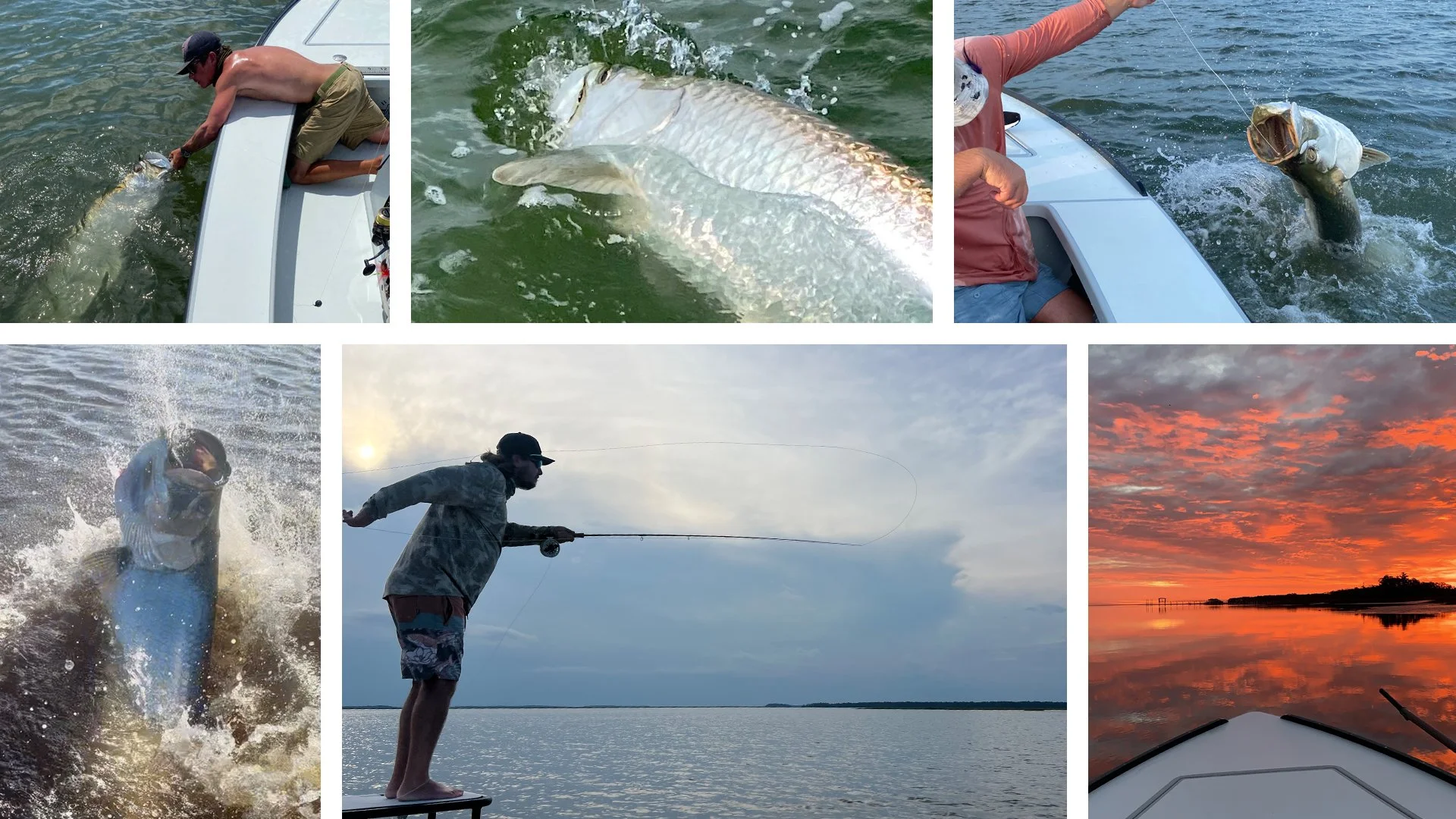
Fly Fishing For Tarpon In Charleston, SC
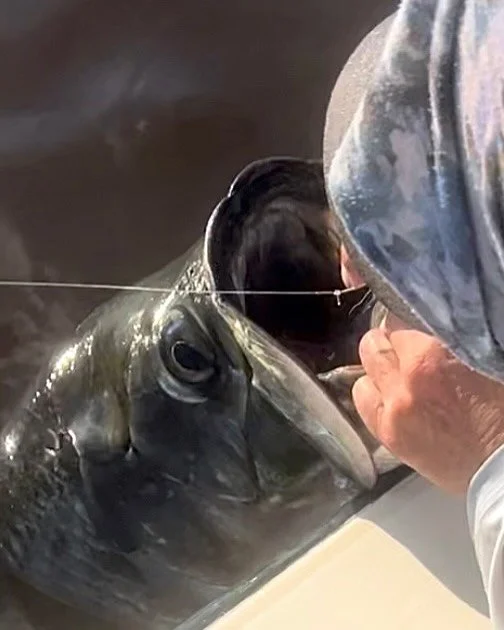
Fly fishing for tarpon is one of the most challenging and rewarding angling experiences the Lowcountry has to offer. Most of the fly fishing around Charleston focuses on migratory tarpon traveling along beaches, channels, and deeper edges. Anglers spend the day scanning for rolling fish, daisy-chains, or singles sliding just under the surface.These fish can be selective, but are here to feed. Shots often happen fast, and it takes a quick and accurate presentation to get the fly in front of them and entice a bite. Hooking a tarpon on fly is one of the most exciting moments in all outdoor pursuits..
The appeal of tarpon on fly is the process: spotting a fish, making the shot, and watching that giant mouth inhale the fly. The jumps, runs, and the head shakes are the reward to a job well done. Landing one every now and again is a bonus.
Light Tackle Tarpon Fishing In Charleston, SC
Most anglers target tarpon in the Lowcountry on light tackle. Conventional tackle gives anglers an advantage over fly gear in most scenarios we encounter tarpon here. While in the area, tarpon can be consistently hooked in 6-20 feet of water by drifting baits, casting soft plastics into rolling fish, or working live bait around structure and bait schools. When conditions line up, sight fishing tarpon with spinning gear can be just as visual and exciting as fly fishing.
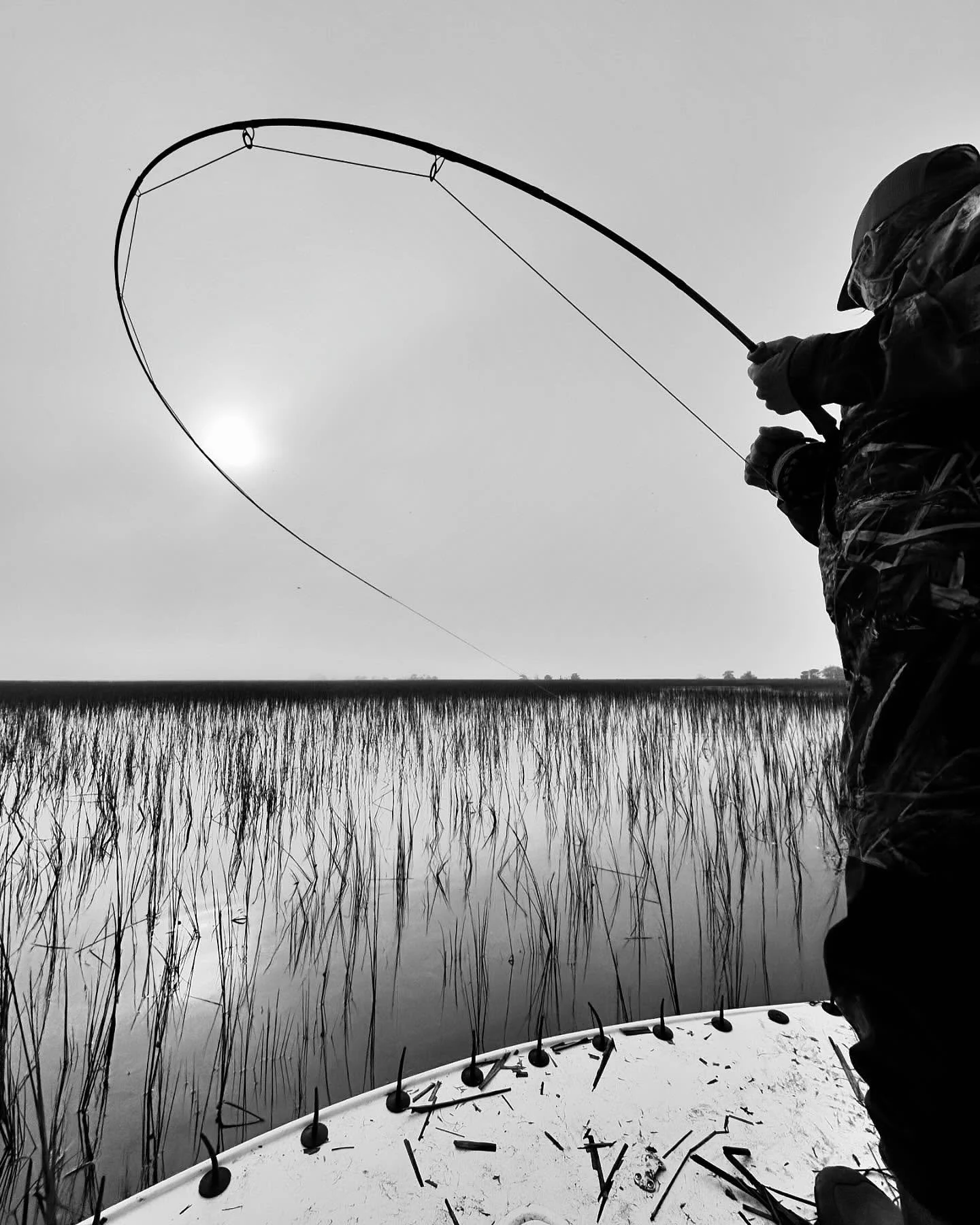
Tarpon are powerful and unpredictable. Even a smaller fish will empty drag and launch itself skyward. Larger fish may take you into deep water or test every connection in your tackle. Light tackle tarpon fishing is a mix of hunting, timing, and skill.
Some days call for technical fishing and long waits between shots. Other days, the fish are active and feeding aggressively. Tarpon fishing is never guaranteed, but when it comes together, it’s unforgettable.
Seasons for Tarpon in Charleston, SC
Tarpon are a warm-water species and arrive in the Lowcountry when conditions stabilize. The peak season is reliable, but every year brings its own rhythm.
Late Spring: The first fish begin showing up as water temperatures climb. These early-season tarpon are often scattered but willing to eat.
Summer: Prime time. Tarpon migrate through Charleston, Kiawah, and Folly in strong numbers. Expect rolling fish, feeding activity, and the best fly and light tackle opportunities of the year.
Early Fall: Tarpon remain active as long as the water stays warm. September often provides some of the most consistent fishing, especially around bait-rich areas.
Late Fall–Winter: Tarpon migrate south as temperatures drop. Sightings become rare until the next season begins.
Charleston Tarpon Fishing Charters
Capt. Caleb Andrews offers half day, three-quarter day, and full day fly and light tackle tarpon fishing trips out of Charleston, Kiawah Island, Folly Beach, and Mt Pleasant, South Carolina. Multiple boats are available for groups of more than 2 people. Contact us for current rates and availability. All trips include tackle/flies, fuel costs, launch fees, and a cooler with water and ice.
Payments And Deposits
Cash, Check or Venmo.
$200 per day per boat deposit for all trips
Venmo or mail deposits to:
Caleb Andrews
1052 Old Georgetown Rd Unit A
Mount Pleasant, SC 29464
(434) 981-6473
Things To Bring
Polarized sunglasses (amber or copper lenses preferred)
Hat and sun protection
8/9, & 10 wt. rods
Quick drying clothing
Rain gear
Shoes with non-marking soles
Willingness to have a good time